
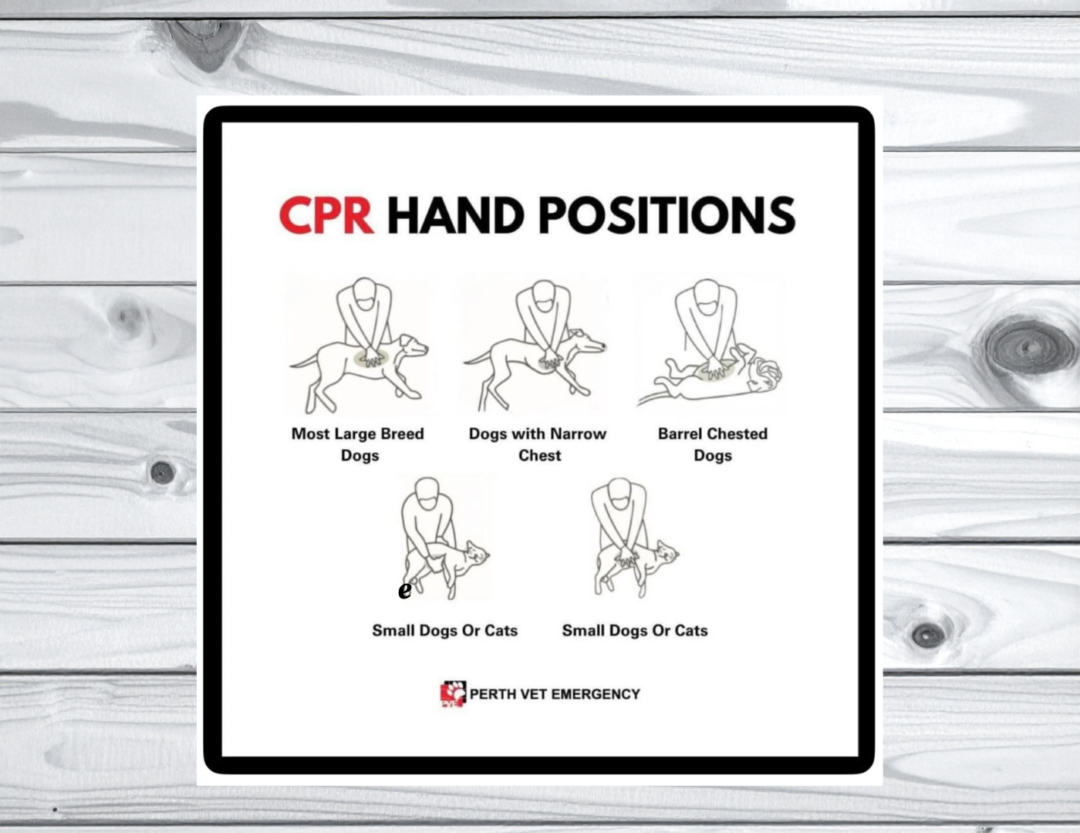
Understanding CPR hand positions for pets is a vital lifesaving skill every pet owner should know. In emergency situations such as cardiac arrest, choking, drowning, or trauma, performing proper pet CPR can significantly increase the chances of survival for dogs and cats.
This educational guide explains the correct CPR hand placement for pets, based on body size and chest shape, so you can respond quickly and confidently during a pet emergency.
🐕 Most Large-Breed Dogs
Common breeds include Labrador Retrievers, Golden Retrievers, German Shepherds, and Rottweilers.
🔹 Correct Hand Position
- Place both hands over the widest part of the chest
- Keep arms straight and shoulders positioned directly above your hands
🔹 Compression Guidelines
- Compress the chest one-third to one-half of its width
- Perform 100–120 compressions per minute
This technique helps circulate blood effectively during large dog CPR.
🐕🦺 Dogs with Narrow Chests (Deep-Chested Breeds)
Examples include Greyhounds, Dobermans, Whippets, and Afghan Hounds.
🔹 Correct Hand Position
- Place hands directly over the heart, just behind the elbow
- Perform compressions from the side of the chest
🔹 Compression Guidelines
- Use firm, controlled compressions
- Maintain a consistent rhythm for optimal blood flow
This method is recommended for deep-chested dog CPR.
🐕 Barrel-Chested Dogs
Examples include Bulldogs, Pugs, Boxers, and Boston Terriers.
🔹 Correct Hand Position
- Place hands on the sternum (breastbone)
- Position the dog on their back, if possible
🔹 Compression Guidelines
- Press straight down on the chest
- Keep compressions steady and controlled
This position is best for barrel-chested dog CPR, especially brachycephalic breeds.
🐶 Small Dogs and Cats
Includes puppies, toy breeds, kittens, and adult cats.
🔹 Correct Hand Position
- Use one hand or a thumb-and-finger technique around the chest
- Apply gentle but effective pressure
🔹 Compression Guidelines
- Compress approximately one-third of the chest depth
- Avoid excessive force to prevent injury
This approach is essential for small dog CPR and cat CPR.
🚨 Important Pet CPR Safety Tips
✔ Ensure your pet is unconscious and not breathing before starting CPR ✔ Combine chest compressions with rescue breaths if you are trained ✔ Continue CPR until your pet starts breathing or veterinary help arrives
⚠️ Always seek immediate veterinary care after performing CPR, even if your pet appears to recover.
❤️ Be Prepared to Save a Life
Learning pet CPR and first aid empowers pet owners to act during critical emergencies. Consider enrolling in a certified pet first aid and CPR course to gain hands-on training and confidence.
📌 Credits
Illustration credited to Perth Vet Emergency
.
.
.
PetCPR #DogCPR #CatCPR #PetFirstAid #AnimalEmergency #EmergencyPetCare #PetSafety #VeterinaryCare #AnimalFirstAid #CPRForPets