
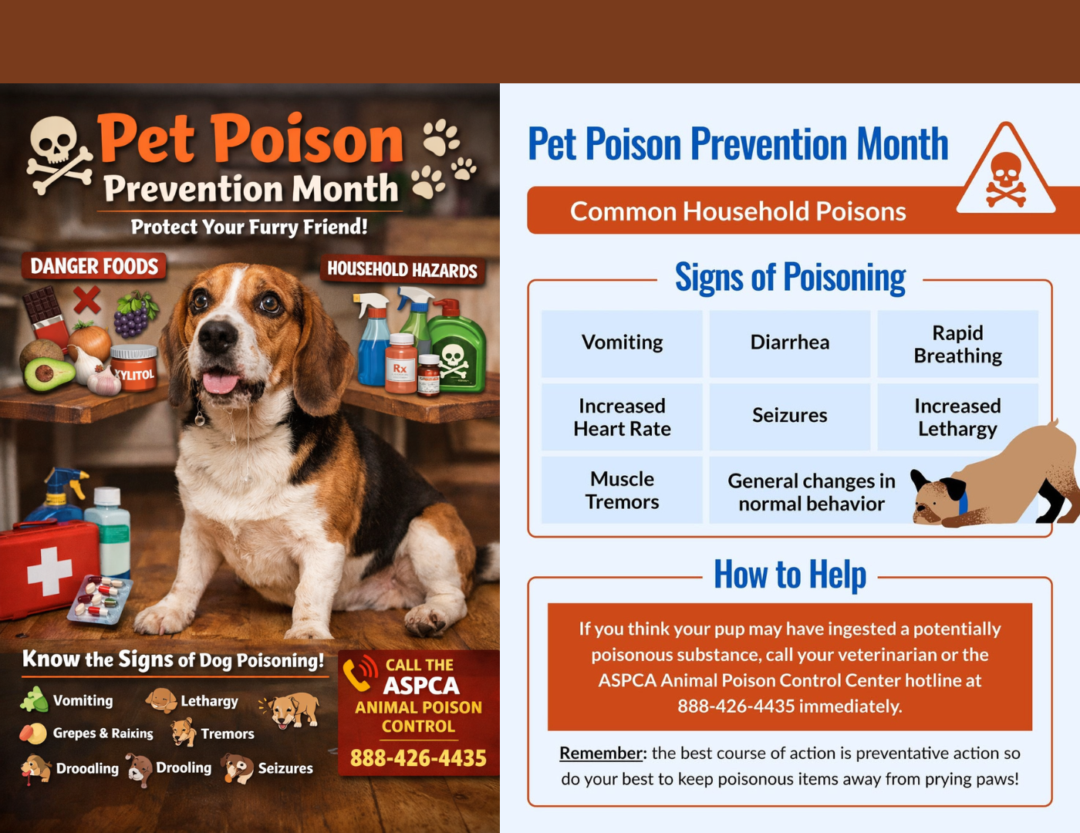
March is Pet Poison Prevention Month, a critical time to raise awareness about the everyday hazards that can seriously harm our pets. Each year, thousands of dogs experience accidental poisoning from common foods, medications, and household products found right inside the home.
Being informed about pet toxins, dog poisoning symptoms, and emergency steps can save your pet’s life. 🧡
If you suspect your dog has ingested something toxic, contact your veterinarian immediately or call the ASPCA Animal Poison Control Center (888-426-4435) 📞 for 24/7 expert assistance.
🍫🥑 Common Foods That Are Toxic to Dogs
Many human foods can be dangerous — even deadly — for dogs.
🚫 Chocolate
🚫 Grapes & Raisins
🚫 Onions & Garlic
🚫 Xylitol (found in sugar-free gum, candy, some peanut butter)
🚫 Avocado
🚫 Alcohol
🚫 Caffeine
These toxic foods can cause symptoms ranging from vomiting and diarrhea to kidney failure, seizures, and heart complications. Always store food safely and avoid feeding table scraps unless approved by your vet.
🧴💊 Household Items That Can Poison Pets
Pet poisoning often happens outside the kitchen. Everyday products may pose hidden risks.
⚠️ Cleaning supplies & disinfectants
⚠️ Human medications (pain relievers, antidepressants, cold medicine)
⚠️ Rodenticides & insecticides
⚠️ Antifreeze (even tiny amounts can be fatal)
⚠️ Essential oils
🔒 Keep cabinets secured, medications out of reach, and consider child-proof locks to create a safer, pet-friendly home.
🚨 Signs of Dog Poisoning
Early recognition is key. Contact a veterinary professional immediately if your dog shows:
🔴 Vomiting or diarrhea
🔴 Excessive drooling
🔴 Lethargy or weakness
🔴 Tremors or seizures
🔴 Difficulty breathing
🔴 Loss of appetite
🔴 Sudden behavior changes
⏳ When it comes to pet poisoning, time is critical. Fast action can significantly improve outcomes.
🛡️ How to Prevent Pet Poisoning
Prevention is the best protection.
✔️ Store toxic foods in sealed containers
✔️ Secure trash cans
✔️ Use pet-safe cleaning products
✔️ Never leave medications unattended
✔️ Educate family members & guests
✔️ Keep emergency numbers easily accessible
🐶 Protecting Your Pet Starts at Home
Pet Poison Prevention Month is a reminder that awareness saves lives. By understanding common pet toxins, dog poisoning symptoms, and emergency response steps, you can create a safer environment for your furry family member.
If you ever suspect poisoning, act immediately and contact your veterinarian or the ASPCA Animal Poison Control Center without delay. 📞
Your quick response could make all the difference. 🐾✨
📢 Hashtags for Awareness & Visibility
#PetPoisonPreventionMonth #PetPoisonPrevention #DogSafety #PetSafety #DogHealth #PetHealth #PetCareTips #DogWellness #PetEmergency #AnimalHealth #VeterinaryCare #ResponsiblePetOwner #DogParents #FurBabySafety #ToxicFoodsForDogs #PetAwareness #ASPCA